How do I choose a turntable?
Start with the deck and tonearm, then match a cartridge and phono stage to suit. Drive type sets the character of the foundation: most audiophile decks use belt drive to isolate the platter from motor noise, while direct drive trades a slightly higher noise floor for instant, rock-steady speed.
Across every deck below, the plinth, bearing, and tonearm matter more than the drive type alone — which is why we audition before we recommend.
Curated Decks
Hand-selected models from the world's most respected analogue manufacturers.
Cartridge Matching
Tonearm mass paired to cartridge compliance for an ideal 8–12 Hz resonance.
Expert Installation
Precise alignment of tracking force, anti-skate, azimuth, and VTA using professional tooling.
Long-Term Support
Ongoing maintenance, stylus replacement, and performance tuning.
Turntables in Ottawa: A Buyer's Guide
A turntable is the source component that reads music from a vinyl record, and its sound is shaped far more by the plinth, bearing, tonearm, and cartridge than by any single headline spec. It is the heart of an analogue system for the listener who values the ritual and the tonal richness of records. Our current decks are belt-drive designs, prized for isolating the platter from motor noise.
Key Takeaways
- A turntable's performance is set by the plinth, bearing, tonearm, and cartridge — more than by drive type.
- Our current decks are belt-drive, valued for a low noise floor.
- You need a phono stage — built into some amplifiers, or as a separate box. See our phono preamplifiers.
- Professional setup (tracking force, anti-skate, alignment) protects your records and unlocks performance.
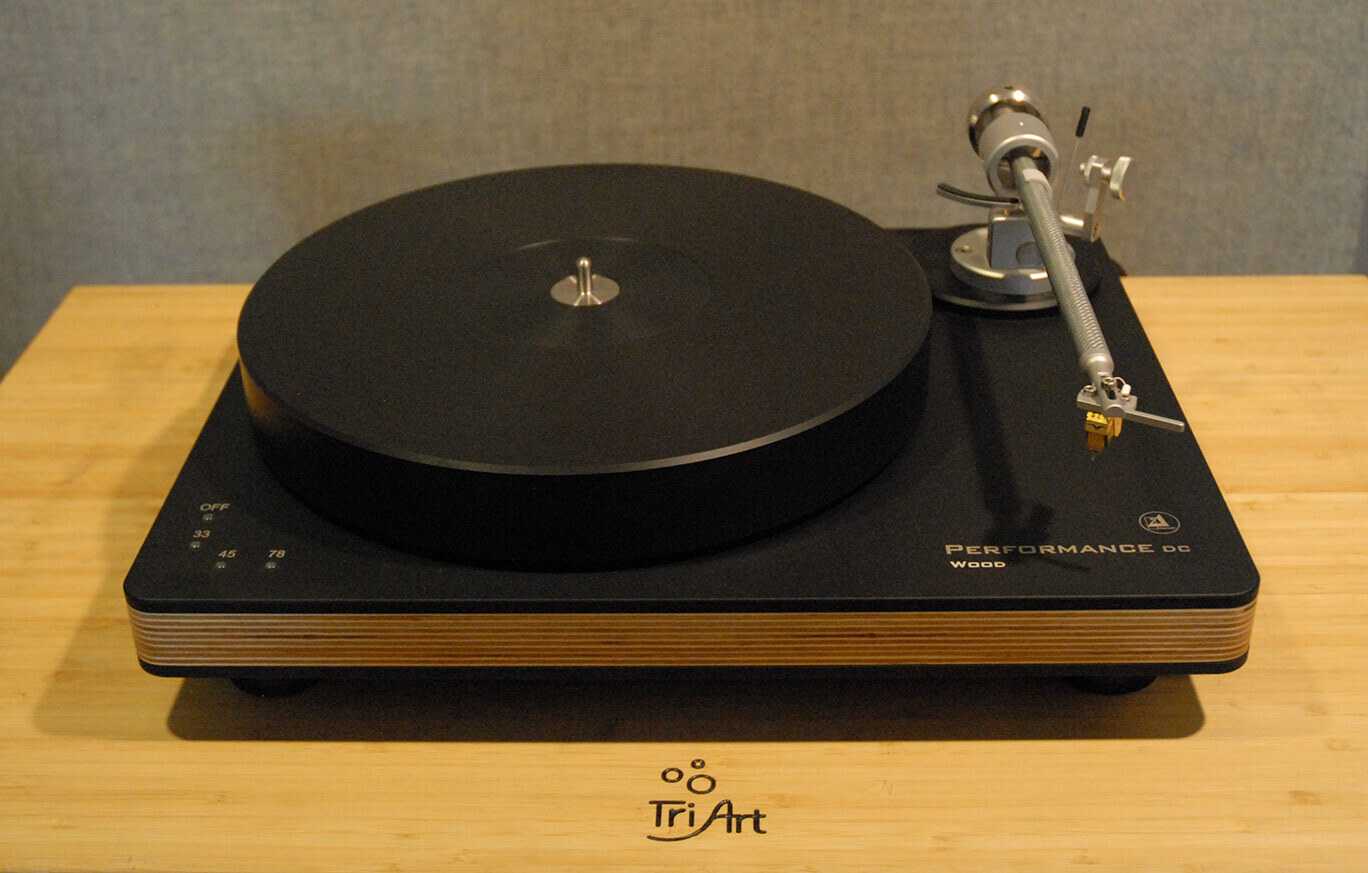
- Price range: Pro-Ject Debut PRO $1,399; Oracle Paris Series V $5,999; Clearaudio Performance DC $8,498.
What Should You Look for in a Turntable?
Look first at the parts that touch the signal. A rigid, well-damped plinth and a precise main bearing keep noise and resonance out of the music; a good tonearm tracks the groove accurately and lets the cartridge do its job. Drive type matters less than build quality — the belt-drive decks we carry span the Pro-Ject Debut PRO at an attainable $1,399 up to the Clearaudio Performance DC at $8,498, with the Oracle Paris Series V at $5,999 in between.
Do You Need a Phono Preamp With a Turntable?
Yes — the signal from a turntable is tiny and needs RIAA equalization before it can drive a line input. Some turntables and integrated amplifiers include a built-in phono stage; if yours does not, or you want to upgrade, you will need a dedicated phono preamplifier matched to your cartridge type (moving magnet or moving coil).
Why Does Professional Setup Matter?
Setup directly determines both sound quality and record wear. Tracking force, anti-skate, overhang, azimuth, and vertical tracking angle all need to be set within fine tolerances so the stylus sits correctly in the groove. We set each parameter with alignment protractors and a tracking-force gauge, which keeps tracking accurate, channels balanced, and stylus and record life long.
Our Turntables at a Glance
Not sure where to start? Book a listening session and we will demo a deck in your budget, set up correctly, on speakers you can hear it on.