Walk into any serious listening room and you'll notice the same thing. The owner will talk about the amplifier, brag about the turntable, gush over the speakers. The cables? Almost always an afterthought. Yet the wires running between those components carry every note the system produces, and the wrong ones can quietly hold back everything upstream of them.
We've been matching hi-fi cables to Ottawa systems since 1986, from our showroom at 903 Carling Avenue — and unlike most of what sits in our racks, cables are something we actually build ourselves. Hand-soldered, custom-terminated interconnects and speaker cables come off our own bench, alongside carried lines from Cardas, Transparent, WBT, and PS Audio. Here's what genuinely matters when you're shopping for hi-fi cables in Ottawa, what a custom build can do that an off-the-shelf box can't, and how to spend wisely rather than just heavily.
What Makes a Hi-Fi Cable Worth the Investment?
A cable is, at its core, a conductor wrapped in insulation. Easy enough. What separates a $20 lamp-cord from a serious audio cable is the care taken over every variable that affects how cleanly an analog or digital signal travels between two points.
Conductor Material and Purity
Oxygen-free copper (OFC) is the floor, not the ceiling. Higher-tier cables step up to long-grain copper, OCC (Ohno Continuous Casting) copper, or silver-plated conductors. Cardas, one of our longest-standing lines, built its reputation on ultra-pure copper and its distinctive golden-ratio stranding, designed to break up the resonances that develop inside a conductor bundle. Whether your ears catch the difference between conductor grades is a fair question — we'll get to that debate below — but the materials themselves are genuinely different, and so is the discipline behind them.
Geometry and Shielding
Cable geometry is the unsung hero here. The way conductors are twisted, spaced, and shielded determines how much electromagnetic and radio-frequency interference sneaks into your signal path. Good shielding matters more in a downtown condo packed with Wi-Fi routers and smart bulbs than it does in a quiet rural house near Almonte, which is exactly why cable advice should start with a conversation about where and how you listen, not with a price list.
Termination Quality
Even a well-built cable with a sloppy solder joint is just an expensive failure point. Hand-soldered terminations with silver-content solder and properly engineered connectors are the details that separate bench-built work from mass-produced spools. It's one reason we carry WBT — the German-made locking RCA plugs, spades, and binding posts that many flagship cable builders specify — and why every cable that leaves our workshop is terminated by hand.
Custom Cables, Built in Our Ottawa Workshop
This is the part of the category we're proudest of. Distinctive Audio has hand-built and custom-terminated cables in-house for decades — not as a sideline, but because it's the only way to get certain jobs done properly.
Tailored Lengths and Terminations
Off-the-shelf cables are sold in fixed increments. Your actual run is rarely one of them. Coiled excess adds inductance you don't want and clutter you definitely don't want, while a too-short cable puts constant strain on connectors. A custom build solves both: we measure your run, build to it, and terminate with the connectors your gear actually needs — RCA, XLR, spades, bananas, or something less common.
Hand-Soldered Connections
Mass-produced cables are usually machine-crimped. A hand-soldered joint, done well, has lower resistance and resists oxidation far longer. Rhéal Nadeau, who has run this shop since 1986, came to audio from analytical chemistry, and it shows at the bench: conductor materials, solder composition, and joint quality are treated as things to get measurably right, not as marketing copy.
Repairs, Re-Terminations, and System Matching
Because we build cables, we can also fix them. A favourite interconnect with a failing plug, a speaker cable that needs new terminations after an amplifier change, a balanced run that has to become single-ended — these are bench jobs we handle routinely. And before we build anything new, we'll ask about your speakers, your amplifier topology (tube or solid-state), and your listening preferences. A bright-sounding system paired with the wrong conductor choice can turn fatiguing; that conversation alone is worth the visit.
Which Cable Types Match Your System?
Before spending anything, sort out what you actually need. Most systems use a mix of:
- Speaker cables running from amp to speaker, usually 10 or 12 gauge for runs over eight feet.
- RCA interconnects between source components and a preamp, where shielding and capacitance matter a lot.
- XLR (balanced) interconnects for longer runs and gear with true balanced circuits, with better noise rejection than RCA.
- Power cords feeding the amp and source, where the debate gets loudest.
- Digital cables (coax, AES/EBU, USB) for streamers and DACs, where timing precision matters.
Speaker Cables
For most homes, a quality 12-gauge run is the sweet spot, stepping up to 10-gauge for long pulls or demanding loudspeakers. Cardas and Transparent both make excellent speaker cable with clear upgrade paths, and our own bench-built runs cover the cases the catalogues don't — odd lengths, bi-wire configurations, unusual terminations. There's more detail on our interconnects and speaker cables page.
RCA and XLR Interconnects
If your electronics offer balanced connections, XLR is worth using for longer runs — its noise rejection is a genuine, measurable advantage. For RCA, shielding and capacitance matter most. We stock a deep range of Cardas interconnects and Transparent's The Link, and we build custom interconnects to order in either format, at any length, with your choice of connectors.
Power Cords and Conditioners
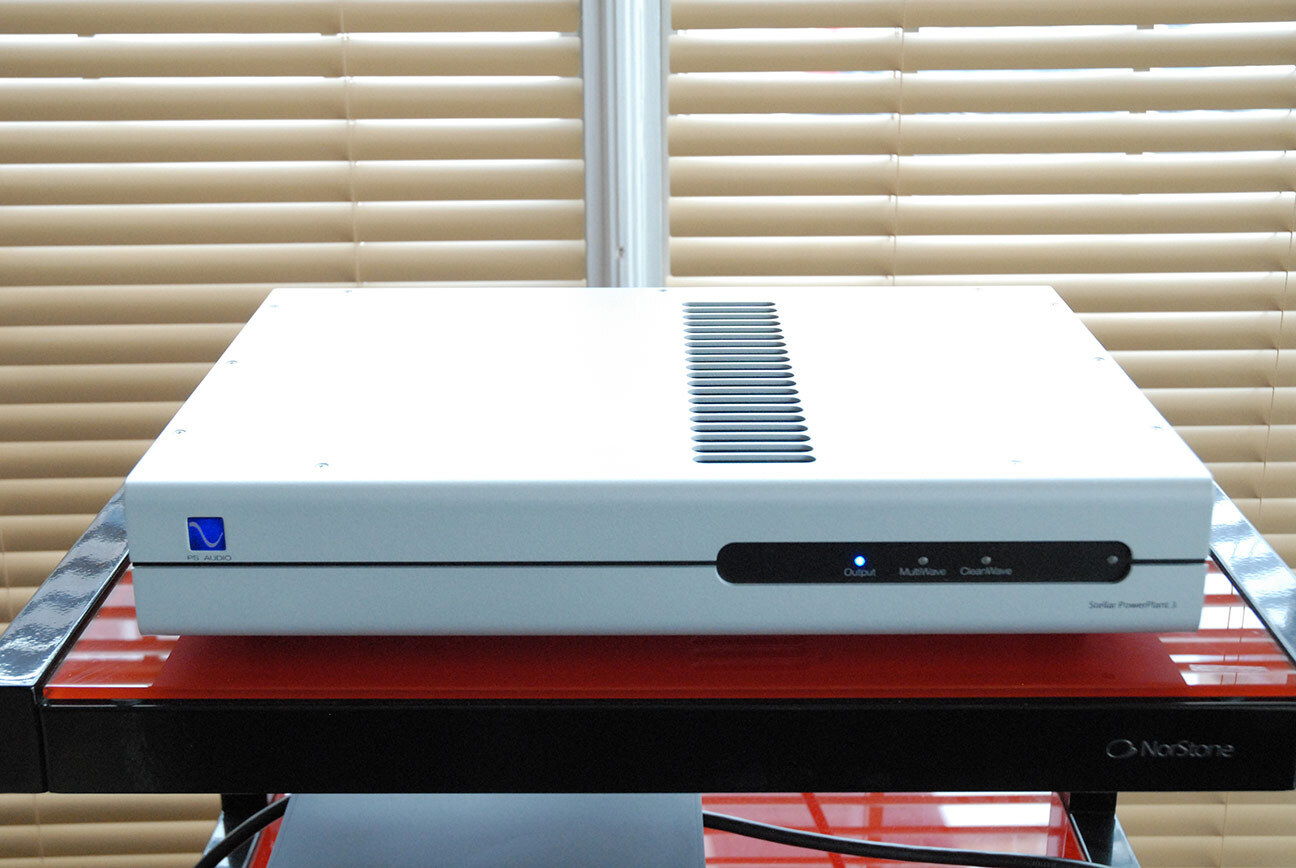
Power is where skeptics roll their eyes and enthusiasts swear they hear a quieter background. We sit somewhere in the middle. A well-shielded power cord — the Shunyata Venom we keep in stock is a sensible first step — can audibly lower the noise floor in a system fed from a busy electrical panel, which describes a lot of older Glebe and Westboro homes. For deeper problems, power conditioning and regeneration go further: PS Audio's Power Plant regenerators rebuild the AC waveform outright rather than merely filtering it, taking the quality of your electrical service out of the equation entirely.
The Objectivist–Subjectivist Debate, and a Pragmatist's Answer
The Measurement-First Camp
Objectivists argue that once a cable meets baseline electrical specs — adequate gauge, sound termination, proper shielding — further spending produces no measurable difference. They're right about something important: those fundamentals are measurable, they matter most, and no exotic material rescues a cable that gets them wrong.
The Listening-First Camp
Subjectivists counter that measurements don't capture everything our ears process over hours of listening. Owners of revealing electrostatics like the MartinLogans we carry often report distinct shifts in imaging and treble texture when they change reference cables. Anecdotal? Sure. Universal? Not at all. Real to the listener? Apparently yes.
Our Pragmatist Take
Coming from an analytical background, we hold both ideas at once. Get the measurable fundamentals right first, because they're not negotiable — then let your ears, in your own system, settle the rest. Diminishing returns arrive faster than the industry likes to admit: a $300 interconnect on a $1,500 system is probably misallocated capital, while the same cable on a $15,000 reference rig might be the missing link. Match cable spend to system resolution, and never pay for a difference you couldn't hear.
How to Choose the Right Cable for Your Budget
Roughly 5 to 10 percent of total system cost is a reasonable starting heuristic for cabling. Less than that and you may be bottlenecking components you paid good money for; much more and you're probably chasing ghosts. On a modest system, a set of bench-built custom interconnects and a properly gauged speaker run from our workshop covers the fundamentals for sensible money. As systems grow, Cardas and Transparent offer clear upgrade ladders, and clean-power investments like a PS Audio regenerator start earning their keep.
Two more things worth knowing. Everything we sell is authorized-dealer stock, so manufacturer warranties are real. And our trade-in program applies to cables just as it does to components — as your system evolves, your cabling can evolve with it without starting from zero.
Why Book a Listening Demo Before You Buy
A demo does two things a spec sheet can't. First, it confirms whether you actually hear a difference, which is the only metric that matters when you're the one paying. Second, it lets you ask questions the internet won't answer honestly — because the internet has opinions, but it doesn't have your room, your gear, or your ears.
Bring music you know intimately, not audiophile demo discs. A familiar vocal or a complex jazz piano recording will tell you more in three minutes than an hour of unfamiliar material. Cables won't fix a bad system, but they will either preserve or quietly degrade what a good one can do — and the only honest way to find out which cables earn a place in yours is to listen. Book a listening demo at our Carling Avenue showroom and we'll set up comparisons on gear like yours, with your music, at whatever pace the decision needs.