Compact Footprint
High performance without the bulk. Well suited to intimate listening spaces.
Precise Imaging
Pinpoint accuracy in soundstage reproduction for a holographic experience.
Stand or Shelf
Versatile placement options designed to integrate into any room architecture.
Room-Matched
Expert advice on sizing and placement for your specific acoustic environment.
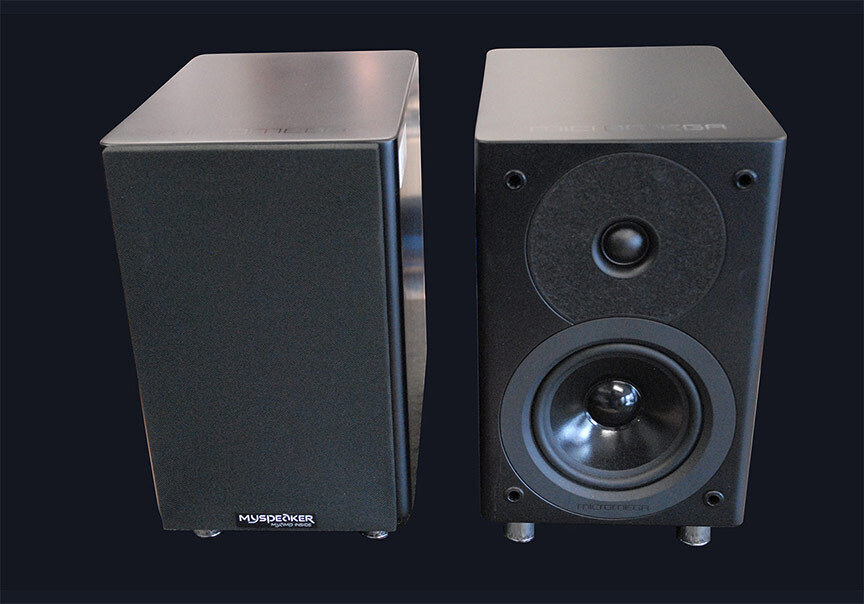
Front and back perspectives of Micromega engineering.
Bookshelf Speakers in Ottawa: A Buyer's Guide
A bookshelf — or standmount — speaker is a compact two-way design built for imaging and tonal accuracy rather than sheer scale. It is the right choice for a small or medium room, a near-field setup, or any space where a full-range tower would overload the boundaries. On proper stands, a good standmount disappears into the room and throws a soundstage that punches well above its size.
Key Takeaways
- Standmounts excel in small-to-medium rooms, trading outright bass for precise imaging.
- Dedicated stands are essential, not optional — they set tweeter height and tighten bass far more than a shelf or sideboard.
- Sealed cabinets place easier near a wall; ported cabinets reach lower but want breathing room.
- Add a subwoofer only for the lowest octaves, larger rooms, or home theatre.
Our standmount selection rotates with the lines we carry — chosen for imaging, tonal balance, and a room-friendly footprint. The Micromega bookshelf speakers, built in France, are a current example. This guide covers the three decisions that most change how a standmount sounds: stands, cabinet type, and placement.
Why Do Bookshelf Speakers Need Stands?
For clean, accurate sound, yes — and it is not a minor upgrade. Dedicated stands decouple the speaker from furniture, place the tweeter near ear level, and keep the cabinet rigid and stable. A mass-loadable stand of the correct height tightens bass and sharpens imaging far more than setting the speakers on a shelf or sideboard, where the surface resonates and the tweeter ends up too low. Plan for stands in the budget from the start, and see our matched speaker stands.
Ported or Sealed: Which Cabinet Suits Your Room?
Standmounts come in two cabinet types, and the right one depends on how close to a wall they will sit.
Sealed designs trade some low-end extension for placement flexibility; ported designs reach lower but want breathing room. If your speakers must live near a boundary, a sealed cabinet is usually the safer bet.
Where Do Bookshelf Speakers Fit Best?
Standmounts excel in small to medium rooms where their precise imaging shines. Keep them out of corners and pull them a foot or two off the wall to control bass and boundary reflections. A toed-in, equilateral-triangle setup between the two speakers and your seat gives a tightly focused soundstage. For most music in a well-sized room, a quality standmount delivers satisfying midbass on its own; add a subwoofer only if you want the lowest octaves or run home theatre.
Tell us about your room and the music you love, and we will recommend the standmounts worth hearing in person. Book a listening demo to compare them on matched stands and amplification.