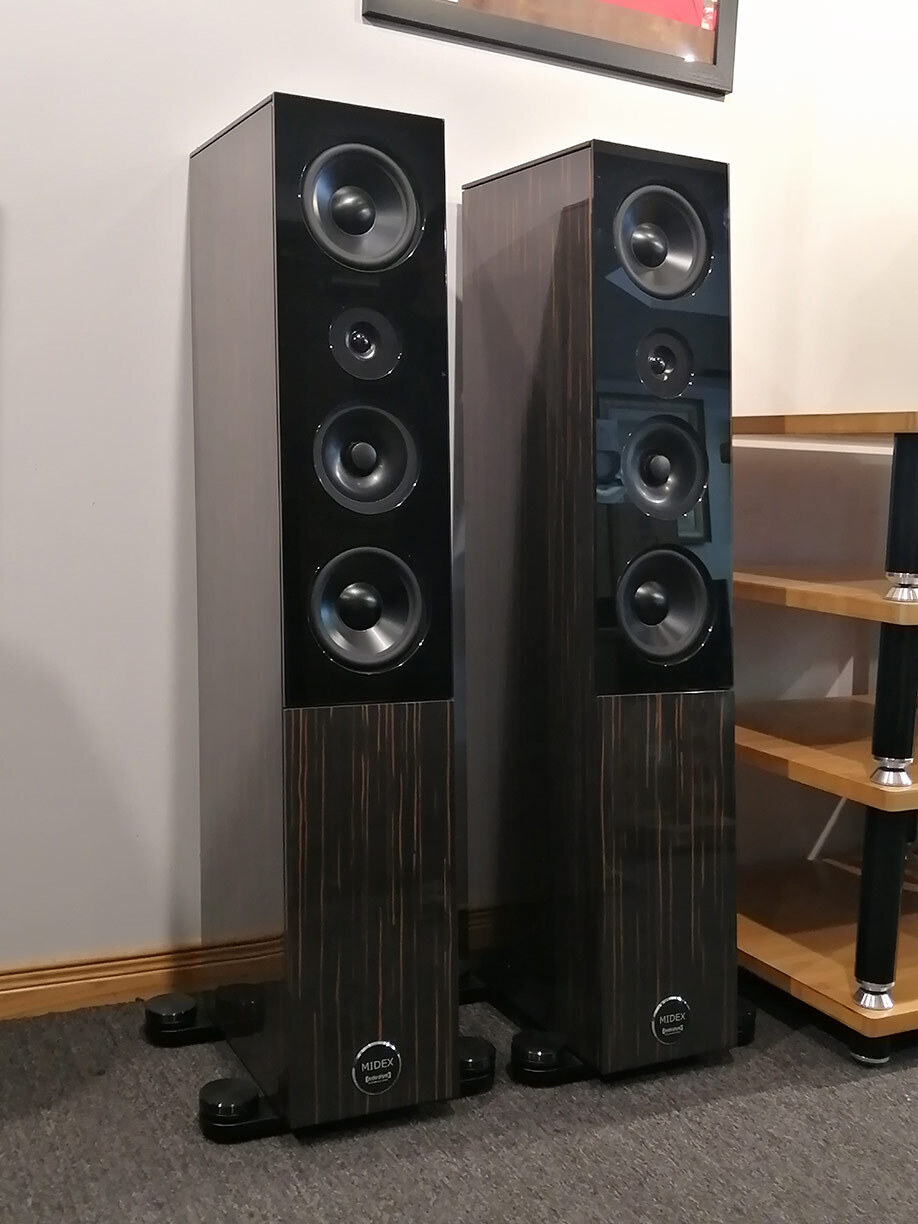
The Room Matters.
Floorstanding speakers move significant air. While they offer impressive scale and dynamic range, they require appropriate space to breathe.
In our experience, matching the speaker to the room size and acoustic properties is as critical as the speaker itself. We offer in-home consultations to ensure your investment performs to its full potential.
Full-Range Sound
Experience the complete frequency spectrum with deep, authoritative bass.
Room-Matched
Ideal for medium to large listening environments.
Placement Advice
Expert guidance on positioning for optimal acoustic performance.
Audition In-Showroom
Hear the difference in our acoustically treated listening rooms.
Floorstanding Speakers in Ottawa: A Buyer's Guide
A floorstanding speaker is a full-range tower that stands on the floor and houses multiple drivers in a tall cabinet, giving it the scale, bass extension, and dynamic headroom to fill a medium or large room without a subwoofer. It is the right choice for a dedicated listening room or open living space where you want the music to have weight and presence rather than for a small study or desktop.
Key Takeaways
- Full-range towers suit rooms of roughly 150 sq ft and up; allow 2–3 ft of clearance from side and rear walls.
- Both of our towers are 4-ohm loads — the Audio Physics Classic 15 at 89 dB and the MartinLogan Motion F20 at 92 dB — so pair them with a high-current amplifier.
- A subwoofer is optional for two-channel music but worthwhile for home theatre and bass-heavy genres.
- MSRP: Audio Physics Classic 15 $5,700; MartinLogan Motion F20 $4,499.
This guide skips the primer and goes straight to what matters when you are choosing towers: how they differ from a standmount, how much room they need, how to partner them with the right amplifier, and how our current floorstanders compare on the numbers that actually change what you hear.
What Makes a Floorstanding Speaker Different?
The difference is cabinet volume and driver count. A tower can carry two or three woofers plus a midrange and tweeter in a tall enclosure, so it moves more air and reaches lower than a bookshelf speaker of the same family. That extra surface area is what produces authoritative low-end and the larger, room-filling soundstage that full-range designs are known for.
Two specifications tell you how a tower will behave with your electronics: nominal impedance and sensitivity. Our Audio Physics Classic 15 is a 4-ohm design rated at 89 dB sensitivity, while the MartinLogan Motion F20 is a 4-ohm load at 92 dB. The lower the sensitivity and impedance, the more current the speaker draws — which is why amplifier matching matters as much as the speaker itself.
How Much Room Do Floorstanders Need?
Plan for a room of at least 150–200 square feet. Towers move a lot of air, and in a space that is too small the bass loads up against the walls and turns boomy. Give them room to breathe: keep the cabinets at least two to three feet from the side and rear walls, and set the two speakers and your seat in an equilateral triangle for a tightly focused stereo image.
Room interaction is as decisive as the speaker. We offer in-home consultation precisely because the same tower can sound lean in one room and overblown in another — placement, ceiling height, and soft furnishings all shift the balance.
Matching Amplification to Your Towers
Because full-range towers like these present a 4-ohm load at 89–92 dB, they reward an amplifier with stable current delivery. Power on its own is less important than the amplifier's ability to hold its grip as impedance dips. Browse our amplification range, and consider proper speaker cables and power as part of the same decision rather than an afterthought.
Our Floorstanding Selection at a Glance
The two towers we currently carry sit at different points on the full-range ladder. Both are available to audition in our Ottawa showroom.
Floorstanding, Bookshelf, or Electrostatic?
Pick the format that fits your room and the way you listen before you fix on a brand.
Still unsure? Bring your own music and book a listening demo. Hearing the towers in a treated room, on amplification chosen to suit them, settles the question faster than any spec sheet.