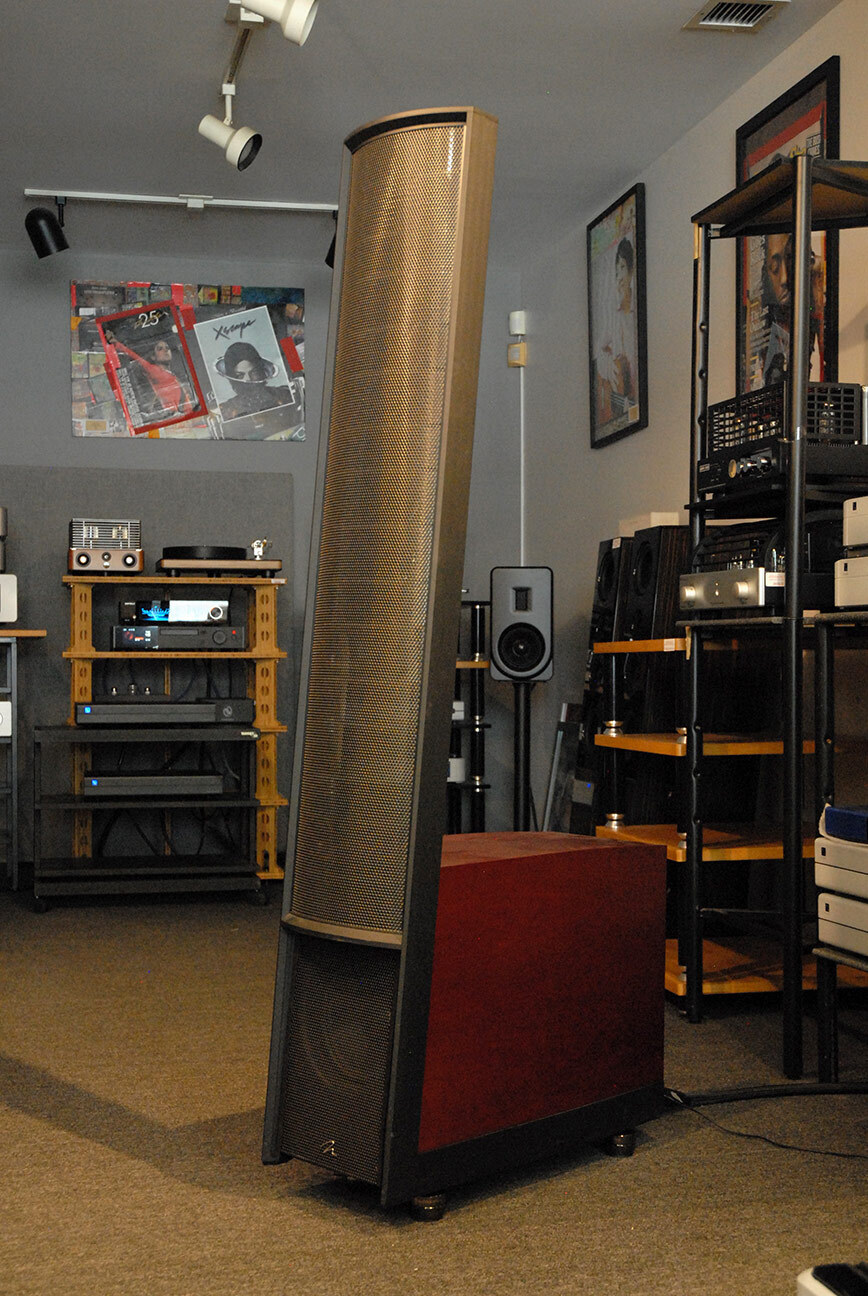
Electrostatic & Panel Speakers in Ottawa: A Buyer's Guide
An electrostatic speaker replaces the conventional cone-and-voice-coil driver with an ultra-light, micro-thin membrane suspended in an electrostatic field. Because that membrane is almost massless, it starts and stops with near-zero distortion, producing the see-through midrange and holographic imaging that panel speakers are famous for. They are for the listener who values transparency above all and is willing to give the panels the placement and amplification they need.
Electrostatic Transparency
A practically weightless thin-film diaphragm responds instantly to audio signals, delivering remarkable clarity and very low distortion.
Holographic Imaging
Experience a three-dimensional soundstage where instruments and voices materialize in the room with pinpoint accuracy.
Placement Advice
Leverage our decades of expertise in optimizing the unique dipole radiation pattern for your specific listening environment.
Audition In-Showroom
Book a private listening session to truly understand the electrostatic difference with your favorite reference tracks.
Key Takeaways
- Electrostatic panels use a near-massless membrane for very low distortion and a see-through midrange.
- They are dipole radiators — keep the panels 2–3 ft from the front wall so the rear wave can form the soundstage.
- Our hybrid MartinLogan designs add powered woofers (Renaissance ESL 15A: active dual 12″, 22 Hz–21 kHz ±3 dB).
- Pair with a high-current, stable amplifier; best chosen after a private in-room audition.
We specialise in MartinLogan's hybrid electrostatics, which pair a full-size panel with a powered dynamic woofer module so you get panel transparency up top and real low-end weight below. This guide explains how they work, why the wall behind them matters so much, and what ownership actually involves.
How Does an Electrostatic Panel Work?
A charged diaphragm sits between two perforated stators; the audio signal varies the field and the diaphragm moves as one piece across its whole surface. There is no cone breakup and almost no moving mass, which is the source of the format's clarity. The hybrid MartinLogan designs add an active bass section so the panel never has to reproduce the deep notes it is least suited to — the Renaissance ESL 15A uses active dual 12-inch woofers, while the Expression ESL 13A runs active dual 10-inch woofers.
Why Does the Wall Behind the Panel Matter?
Electrostatic panels are dipole radiators: they emit sound equally from the front and the back. The rear wave reflects off the wall behind the speaker, and that reflection is what creates the signature spacious, holographic soundstage. Placement is therefore critical — typically two to three feet out from the front wall — and the room behind the panels becomes part of the instrument. We provide expert, in-room advice to dial this in, which is why panels are best chosen after a private audition.
Do Electrostatics Need a Special Amplifier?
Modern panels are more efficient than the electrostatics of decades past, but their impedance can dip at higher frequencies, so they reward a high-current, stable amplifier that holds its composure into a falling load. Because the bass modules are powered, the strain on your main amplifier is reduced — it only drives the panel. See our amplification range for suitable partners.
The MartinLogan Panels We Carry
Three hybrid electrostatics, available to hear by appointment in our Ottawa showroom.
Pricing on the panels is by quotation. The honest way to choose between them is to hear them in a properly set-up room — book a private audition.