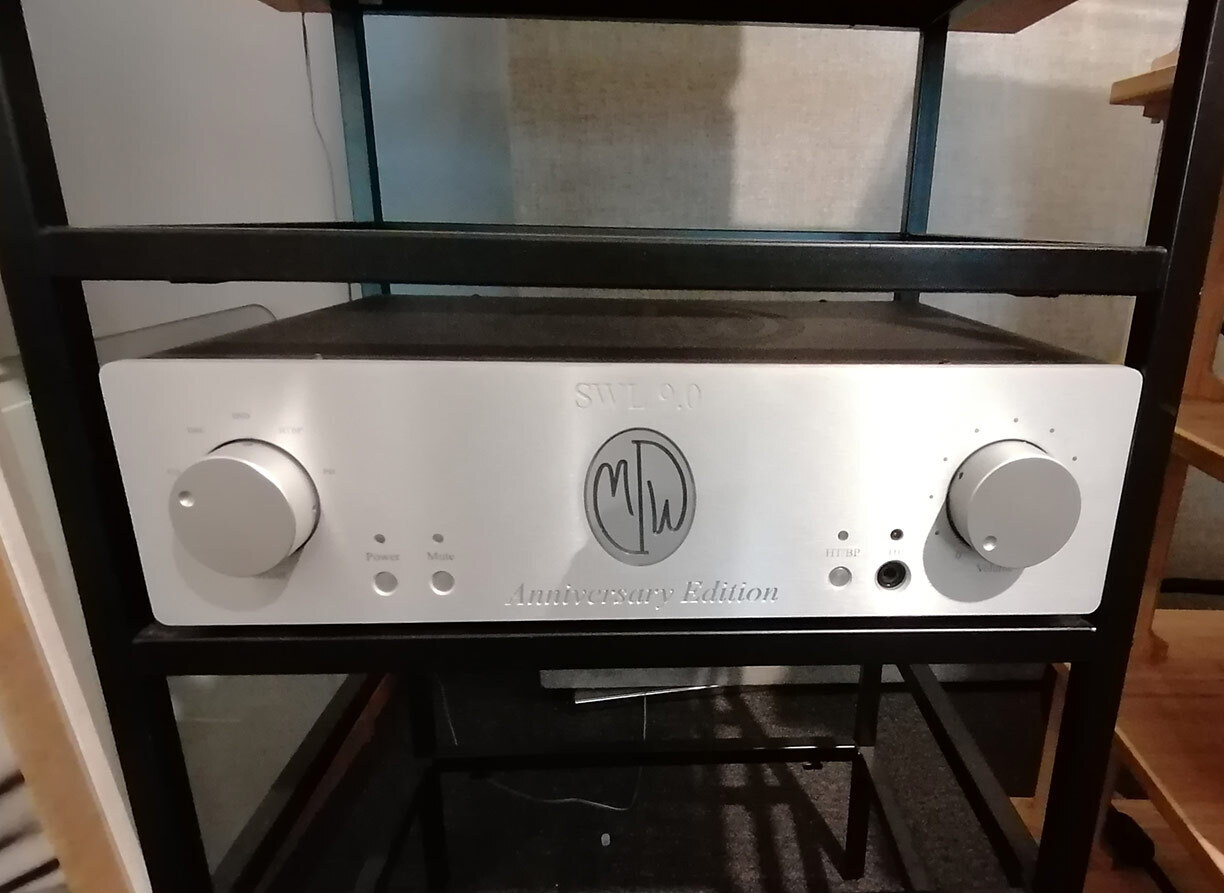
What Does a Preamplifier Do?
A preamplifier does three essential jobs: it switches between your sources, controls volume, and conditions the signal before it reaches the power amplifier. Because every source passes through it, the preamp sets the system's noise floor and a great deal of its tonal character. Keeping these low-level tasks in their own chassis — isolated from the heat and current of the power stage — is exactly why separates can sound so quiet and resolving.
Tube or Solid-State Preamplifier?
Both topologies can sound superb — the choice is about character. Tube preamplifiers like the ModWright LS 100 and Ambrose One are prized for a holographic midrange and subtle harmonic richness, and they pair beautifully with a solid-state power amp for bass grip. Solid-state preamplifiers such as the Parasound Halo JC 2 BP offer dead-quiet backgrounds, absolute neutrality, and maintenance-free operation. The right answer depends on your taste and the rest of your system, which is what a side-by-side audition reveals.
Do I Need a Separate Preamplifier?
A separate preamplifier is the right call when you want the last word in resolution, flexibility, and the freedom to upgrade each stage on its own — versus an integrated amplifier, which folds the preamp and power stages into one simpler box. Separates isolate delicate low-voltage signals from the power supply for a lower noise floor and greater detail, and they let you mix a tube preamp with a solid-state power amp to tune the sound. Remember that a preamp always needs a matching power amplifier to drive your speakers.